This project is a partnership between the Rangers at Yeovil Country Park and the Yeo Rivers Community Trust. The project aims are to rehabilitate and enhance the Dodham Brook within Yeovil Country Park, the concrete flood alleviation channel between the weir and Newton Road and Ninesprings Lake.
Dodham Brook is an urban stream which is designated by the Environment Agency as a Heavily Modified Water Body (HMWB). This is the only waterbody in Somerset where conditions for fish are classified as bad. The stream should have a high amenity value due to its location within a country park.
The ongoing improvements to the brook have taken the first steps to transform the watercourse from a current neglected and uninviting condition into a high quality urban green space which is attractive to people and wildlife.
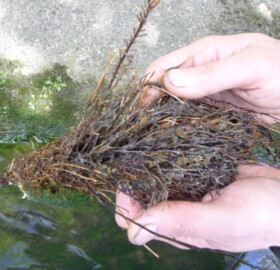
Since the improvements to the concrete flood channel were installed freshwater sponges have recolonised the Dodham and there has even been a sighting on a Freshwater Eel!
We are in the early stages of working with the YCP rangers to make improvements to the Ninesprings Lake. This includes removing a large volume of dogwood whose rampant growth has dominated one bank of the lake and planting this area with common reed and other emergent and marginal plants. The emergent and marginal plants will help to improve water quality through phytoremediation.
In 2025 we will also be removing excess sediment from an area of the pond and creating a water vole bund, improving the habitat for the local water vole population.
Our objectives as part of this project are to achieve improved standards for water quality, wildlife and the environment generally in this section of the catchment by implementing actions which will promote the restoration of natural river processes, improve connectivity for fish and other animals, provide diversified habitats and enhance the number and abundance of different animals and plants. When combined it is hoped that these actions will provide improvements for wildlife, people and the town of Yeovil.
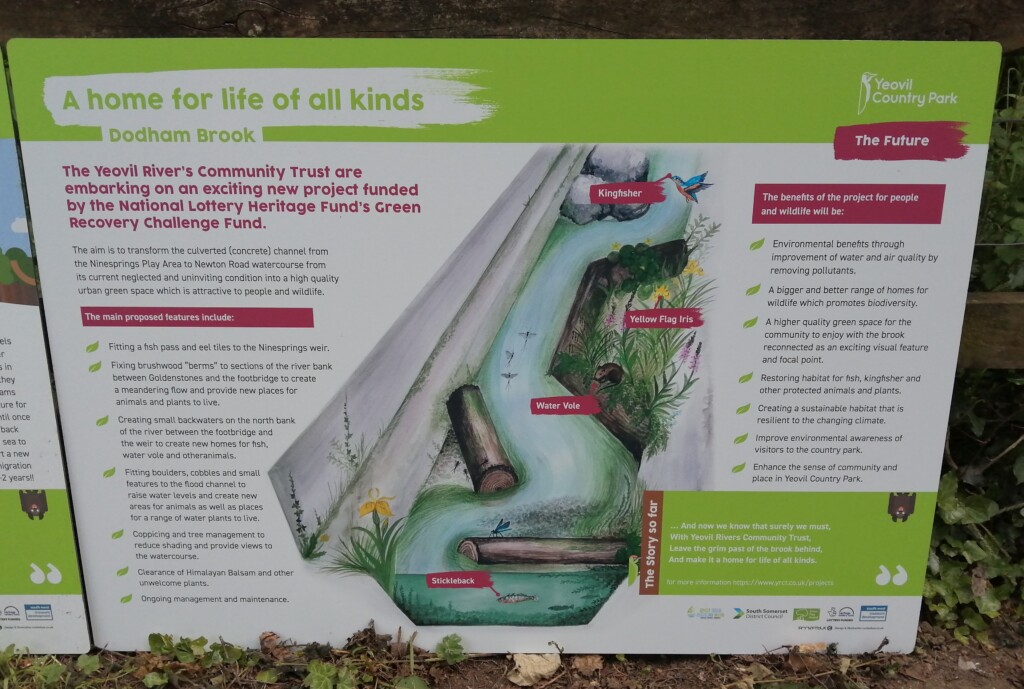
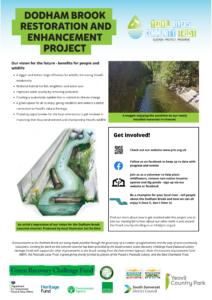
As part of this project, we helped develop an information board in collaboration with Somerset Council that explains our plans for phase 3 with an artist's impression, by Izzi Da Silva.
Phase one
This stage of the project started in October 2018 and concluded in September 2019. A series of ecological surveys and a water quality sampling programme was successfully completed. Computer modelling and other steps required to prepare for obtaining landowner, planning and flood risk consents were also been completed.
These surveys enabled us to design proposed implementations to enhance the habitats on the Dodham Brook.
These proposed features included:
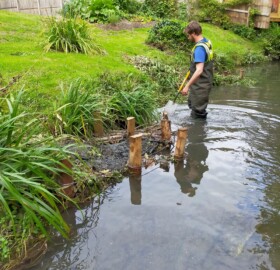
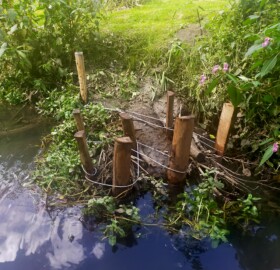
- The construction of berms using natural materials which are securely fixed to the channel bed and bank. Sediment becomes trapped in the structure which permits vegetation to establish over time.
- The design of three aquatic benches which is designed to modify habitats, have positive impacts on the water environment and enhanced habitat for water vole
- Three trees that are hinged into the channel parallel to the bank. The trees are still living as the trunk is not completely cut leaving enough wood to maintain nutrient flows from the roots to the rest of the tree. These trees provide excellent habitat for a wide range of animal species as well as allowing vegetation to become established.
- Wet meadow & habitat creation.

Phase two
Commencing in 2020 phase 2 of the project has been largely an implementation phase, covering reaches 1 and 2, located between Goldenstones Bridge at Ninesprings Weir.
The implementations included the proposed features identified in phase one.
Prior to our implementations, there was no aquatic vegetation along this section of the brook and the species of vegetation present on the bankside was also poor, dominated by willowherb, common nettle and bramble. This lack of variation was therefore impacting the habitats overall diversity, offering little food and shelter for wildlife.
Tree Hinging
Between December 2020 & February 2021, four trees (three alder and one willow) were hinged into the brook following guidance from the Wild Trout Trust. Now settled, the trees are providing new habitats and diversified hydromorphological conditions in the reach.

Aquatic Benches & Reprofiled Bank
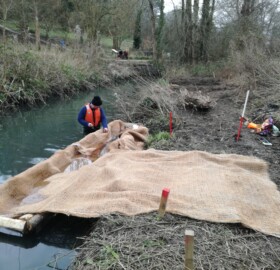
In February 2021, we successfully reprofiled the northern side of the bank on a section of the brook near the footbridge. A length of coir matting was laid to provide additional bank support and this area now floods at higher stage flows as desired, creating a wetland habitat for local wildlife.
Further down the brook, three aquatic benches have been constructed.
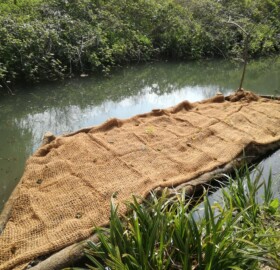
These features are helping to promote both the restoration of the natural river processes and provide a diversified habitat for the water vole and other wildlife. Secured by a timber framework, coir matting forms a natural lining, and 30 brushwood bundles have been packed inside the frames. Made from spare material from around Yeovil Country Park, the bundles vary in size from 1.5m – 2.5m in length and 0.2m – 0.3m in diameter
Excess silt from Ninesprings lake was then poured over bundles on each bench and was allowed to settle. Combined, the brushwood bundles and the silt create an ideal habitat for invertebrates living in the brook and as the benches continue to establish, more silt will collect inside the bench framework.


Seed sowing and planting
Once the silt was allowed to settle on the aquatic benches, they were prepared for planting by laying a final layer of coir matting.
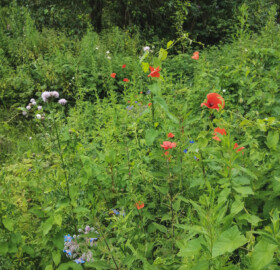
All three benches have been seeded with native wildflowers and planted with a selection of plug plants, including tussock sedge, soft rush, water forget-me-not and marsh marigold.
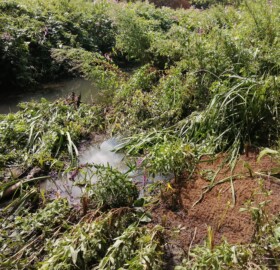
On both the north and south banks between the footbridge and the weir, areas have been prepared and planted with a native nectar and pollen wildflower seed mix and plug plants including, flag iris, meadowsweet and water avens.
A selection of bulbs have also been planted by volunteers, including Snowdrops, Common Star of Bethlehem, Wood anemone, Winter Aconites, English Bluebell and Wild Garlic.
Phase three
In 2021 YRCT successfully obtained a grant from the Government’s Green Recovery Challenge Fund. This in addition to grant funding from the Environment Agency has enabled us to proceed with phase three of our Dodham Restoration Project.

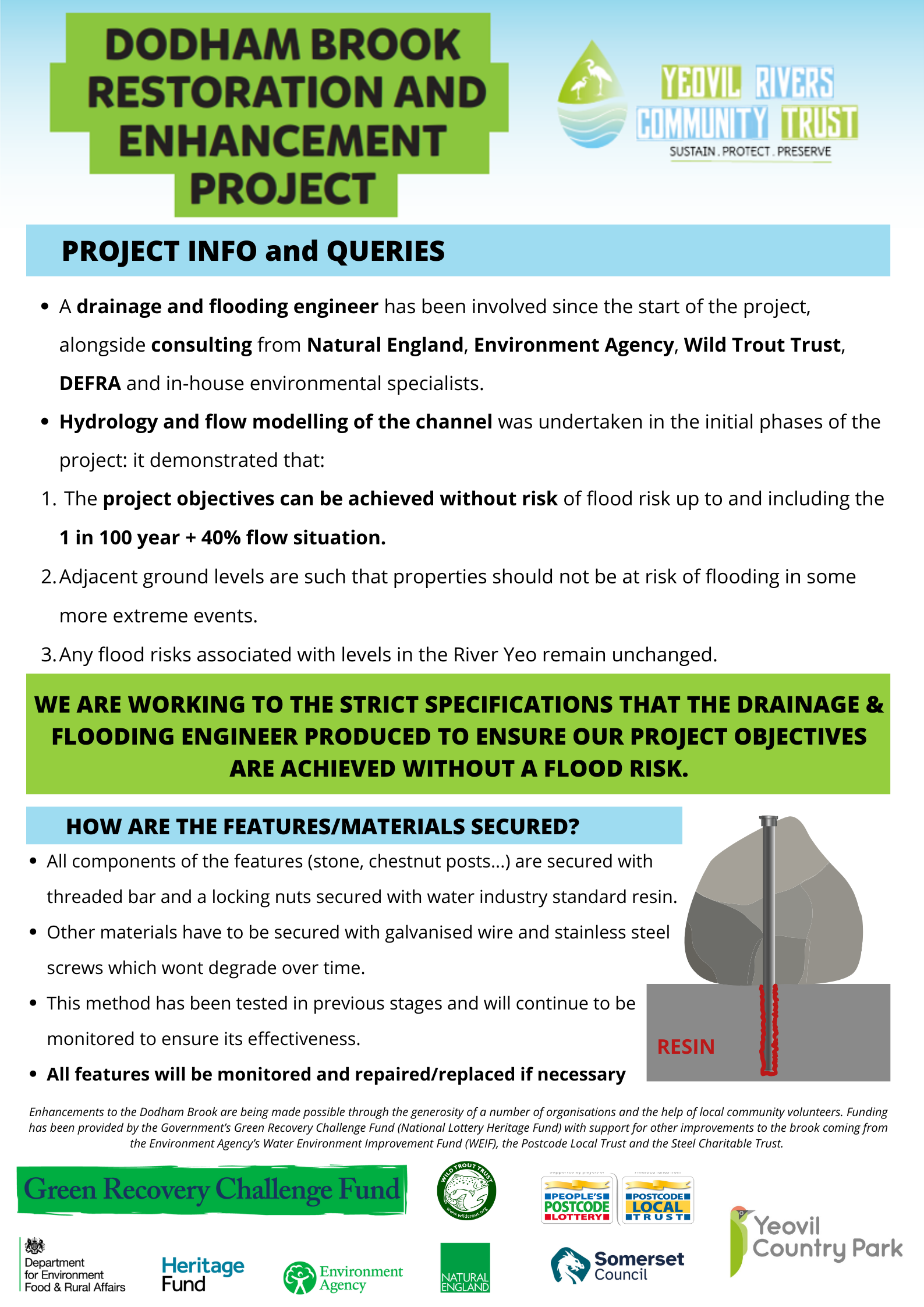
The aim of this phase have been to deliver an extensive package of restoration features and management actions to rehabilitate the concrete flow channel that runs from the Ninesprings Weir to the the River Yeo. This section poses the most significant barrier to connectivity for wildlife and precludes movement between habitats in the Dodham catchment and the River Yeo downstream. This brook section currently has no ecological value, is subject to diffuse and point source pollution and is disconnected from the public and urban landscape.
As part of this project phase, we have been working to:
- Enhance/restore habitat and species diversity
- Restore vital connectivity for wildlife
- Improve water quality
- Mitigate flood risk and ecological impacts downstream
- Reconnect people with nature through volunteering/CSI
The nature-based solutions we plan to deliver as part of this phase aim to restore connectivity to the River Yeo and areas upstream of the concrete channel by installing features that would create islands of new habitat in the channel. The features are designed to reduce water velocities, increase water depth and provide multiple types of habitats, which will provide new homes for plants and animals and facilitate enhanced passage by animals including fish and insects between the Yeo and Dodham Brook. Connectivity will be further improved by the installation of a fish pass. Biodiversity will be significantly increased by planting a diverse range of aquatic plants to help mitigate the effects of climate change.
Project assessments and feature trials
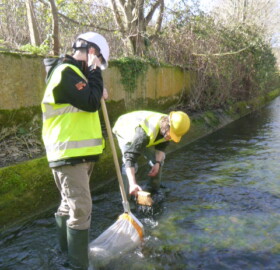
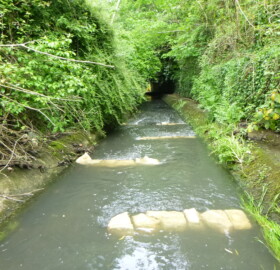
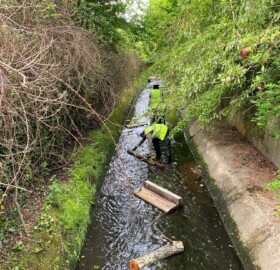
This project saw a busy year in 2022. We assessed how likely it is for different species to take up residence in the channel and were blown away to see how life can establish in the seemingly barren concrete expanse given half a chance. A standardised ‘kick sample’ of a section of the channel revealed that even with the growth of a bit of moss and algae, the concrete section can support amazing numbers of swimming mayfly larvae ('Olives' to those of you who are interested in Riverfly monitoring or fishing), blackfly larvae and shrimp. We also found that any features that diversify the channel, such as willow roots growing through joins in the concrete, or an abandoned workshop clamp sitting on the bottom of the channel, provide habitat for impressive concentrations of aquatic invertebrates and even the odd freshwater limpet. This bodes very well for our plans to create an extensive range of habitat features using logs, rocks, stones and planted-up bays, giving us confidence that they will quickly be colonised.

Features installed
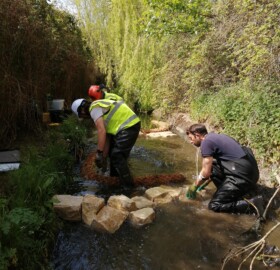
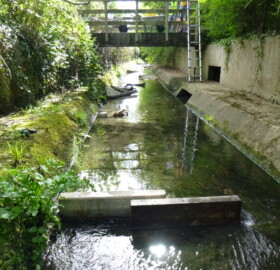
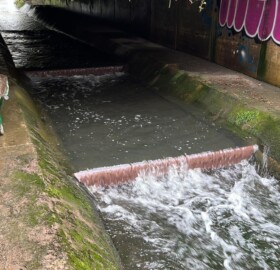
In early 2023 work began at Newton Road Weir alongside our contractor Ivel Aquatics to install a series of baffles that help vary the water level and velocity by creating shallow pools to help wildlife navigate the weir.
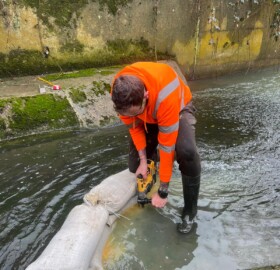
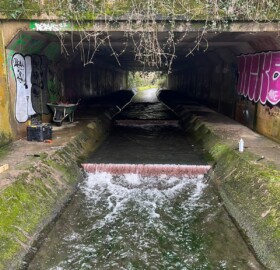
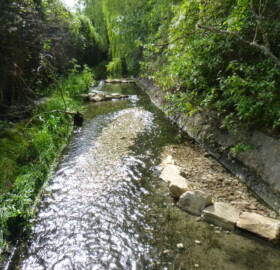
Our in-channel features were also installed alongside Ivel Aquatics. These include a selection of habitat and macrophyte bays, alongside the position of berms made from boulders and scattered boulders. The features will help to vary the water level and velocity at intervals along the channel to provide shelter for wildlife and opportunities for plants to establish.
During the summer months, some these features were planted with a selection of native marginal plants, creating new habitats for wildlife.

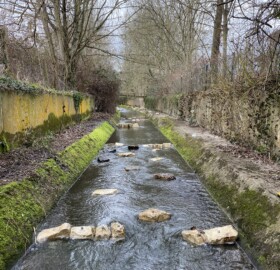
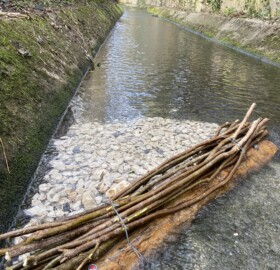
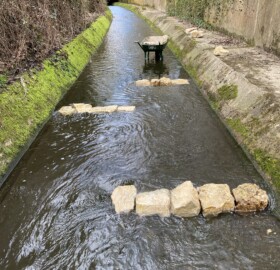

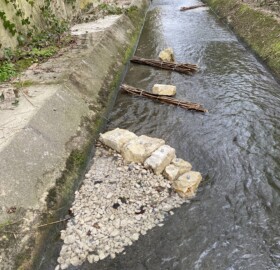
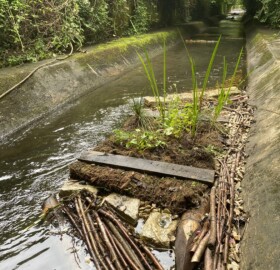
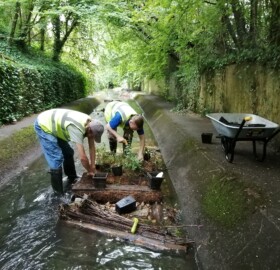
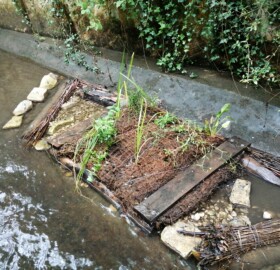
We collaborated with Stonbury to complete enhancement work on the Ninesprings fish pass and the installation of chestnut baffles throughout the Tanyard Way culvert. Both these stretches were previously impassable for fish and other wildlife but have now helped to raise the water level and provide resting areas.
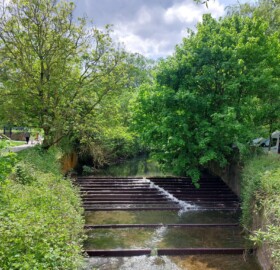
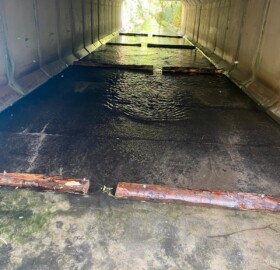
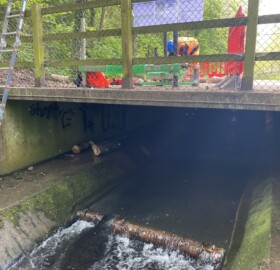
Following the successful implementation during 2023 of the features for phase 3 of the project, we are currently undertaking ongoing monitoring, evaluation and management of these features. This includes a survey programme, necessary management to implementations and the management of invasive non-native species (INNS).
-
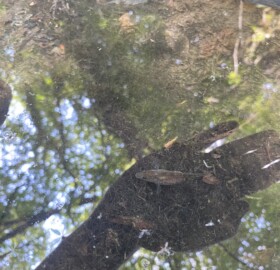
- Stickleback seen in the flood channel
-
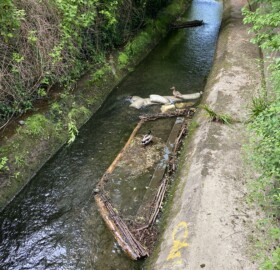
- Ducks enjoying one of the phase 3 features
-

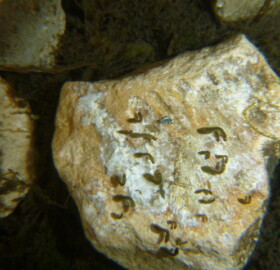
- Freshwater sponge now present throughout the flood channel
As part of this project we continue to engage with the local community in a range of volunteering events and activities. Below is our latest informational flyer outlining the vision of Phase 3 of the Dodham Brook Restoration Project.


"We were most impressed with the results of the restoration project - from the various viewing points it was clear that the work had been very successful. The water was clear and flowing well and the whole environment looked much more attractive and interesting, both for wildlife and for human visitors!"Member of the local community speaking about phase 3 of our Dodham Brook Project
YRCT welcomes the involvement of all members of the community in all our activities.
If you would like to volunteer with us and get updates about our upcoming activity events as part of this project, please get in touch.

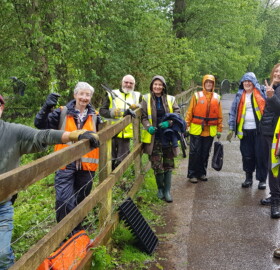
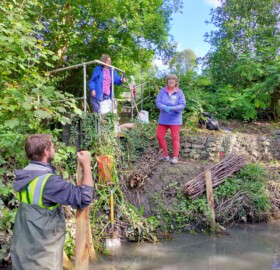
In collaboration with Somerset Council, we take also part in community events at Yeovil Country Park.
-
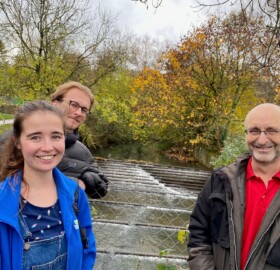
- Lorna, Oscar & Lorne at Ninesprings Weir
-

- Earth Day 2023
-
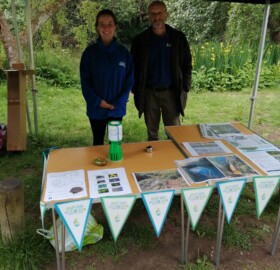
- Giving Dodham A Helping Hand 2022