Bogbean (Menyanthes trifoliata)
credit: Martin Zahnd
Key Facts
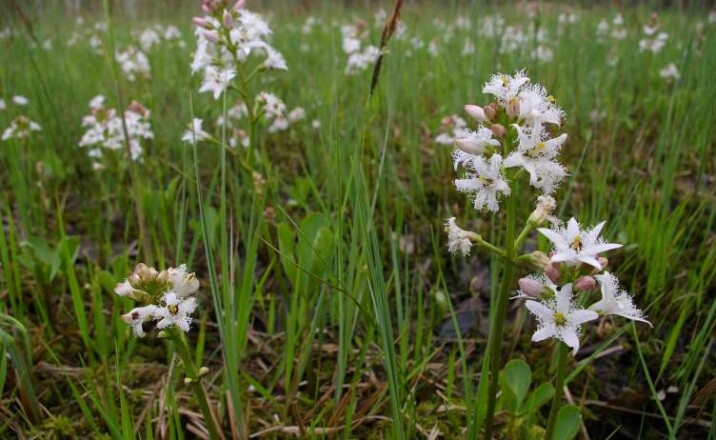
- Bogbean is a wetland plant with thick creeping stems, broad three-part leaves, and star-shaped white or pale pink flowers with fringed petals.
- It grows in marshes, ponds, fens, and the edges of slow-moving freshwater habitats across parts of the UK.
- Bogbean thrives in acidic, waterlogged soils and is often found in boggy wetlands.
- The plant flowers during spring and early summer, usually between April and June.
- Bogbean provides shelter and food for insects and other wetland wildlife.
- Its floating roots help stabilise soft wetland soils and improve habitat quality for aquatic creatures.
- Historically, bogbean was sometimes used in herbal remedies, although it should not be consumed without expert knowledge.
- Height: 15–40cm
- Lifespan: Perennial plant that returns each year
Did You Know
Bogbean can be found in some wetlands and marshy habitats across the UK, including areas of Somerset with suitable boggy conditions. Its scientific name, Menyanthes trifoliata, refers to its distinctive three-part leaves. The plant’s unusual fluffy flowers are specially adapted to attract pollinating insects such as bees and flies. Bogbean is an important part of wetland ecosystems because it helps support biodiversity and provides cover for aquatic insects, amphibians, and small freshwater animals.