
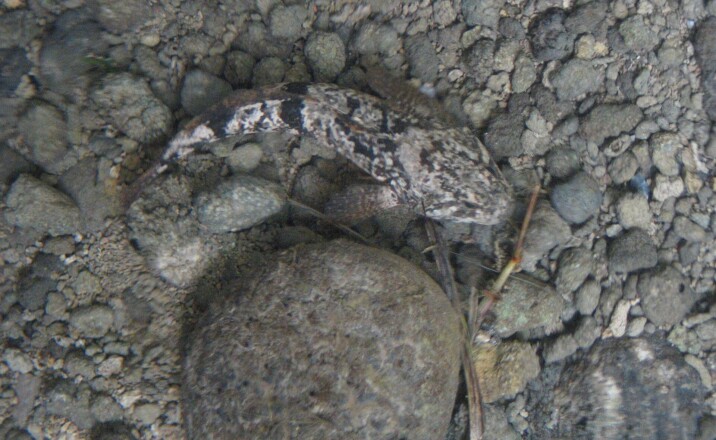
Bullhead (Cottus gobio) – Photo credit: D
Key Facts
- The bullhead fish is a small freshwater fish with a broad, flattened head, mottled brown colouring, and smooth scaleless skin.
- It is often called the European bullhead or Miller’s thumb.
- Bullheads are bottom-dwelling fish that feed mainly on insect larvae, small crustaceans, worms, and fish eggs.
- They are usually found hiding beneath stones, gravel, and submerged roots in fast-flowing, well-oxygenated rivers and streams.
- Male bullheads guard the eggs after spawning, protecting them from predators until they hatch.
Bullheads are mostly active at night and spend the daytime sheltering in crevices and under rocks. - They are an important indicator of clean water because they are sensitive to pollution and poor water quality.
- Bullheads have large pectoral fins which help them balance against strong river currents.
- Length: 8–15cm
- Weight: 10–80g
- Average lifespan: 3–6 years
- Despite their small size, bullheads are territorial and can be aggressive towards other fish that enter their hiding spots.
Did You Know
Bullhead fish have been spotted in several clean streams and river habitats around Yeovil, particularly within sections of the River Yeo and its tributaries. Their presence is often a sign of healthy water quality, as bullheads require clean, well-oxygenated rivers to survive. These small fish are perfectly adapted to life on the riverbed, using their mottled brown colouring to camouflage among stones and gravel. Unlike many other fish, bullheads do not have a swim bladder, so they spend most of their time resting at the bottom of the river. They also play an important role in the local ecosystem, providing food for wildlife such as kingfishers, otters, and larger fish found in Somerset waterways.